Pickle’s Lottery System
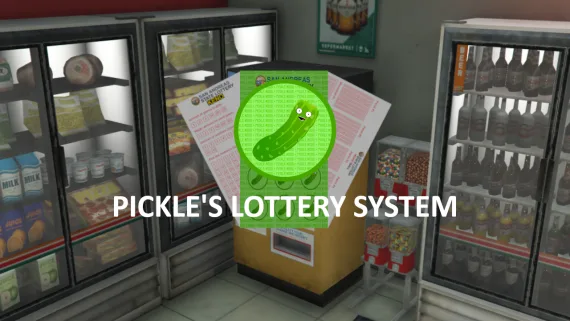
Pickle's Lottery System brings item based gambling to your server with lottery stations, scratch-offs, and drawings. Players can pick their own numbers for Keno and Moneyball or test their luck on three included scratch-off tickets.
All revenue from ticket sales can be automatically distributed directly into society or business accounts through the station configuration.
Features
- Item Based System: Tickets exist as actual inventory items that players purchase, scratch, and redeem.
- Game Variety: Includes Keno, Moneyball, and three scratch-off ticket types out of the box, with support for adding your own.
- Custom Numbers: Players fill out their own numbers when purchasing Keno and Moneyball tickets.
- Drawing History: View current and past games for Keno and Moneyball directly in game.
- Audio Feedback: Built in win sound effect triggers upon redeeming a winning ticket.
- Configurable Odds: Realistic odds and payouts configured per game in the config file.
- Business Integration: Route store proceeds directly to society or business bank accounts.
- Modifiable Bridge: Modify framework and inventory bridges freely, even on escrowed versions.
Inventory Support
- ESX: Ox Inventory, Quasar Inventory
- QBCore: QB-Inventory (or any system using QBCore methods), Ox Inventory, Quasar Inventory
Installation
- Open the
_INSTALLfolder. - Ensure
pickle_lotteryafterox_libin your server configuration. - Import the SQL file into your database.
- Register the items and add their images to your inventory.
- Restart the server.
Requirements
ox_lib- ESX 1.1+ or QBCore
- MySQL wrapper (Ox MySQL, mysql-async, etc.)
Set up Pickle’s Lottery System safely
Use the documentation included with the download as the final authority. This plan helps you prepare a rollback, install in the right order, and verify the resource before it reaches players.
- Resource type
- FiveM script
- Catalog category
- ESX Scripts
- Package source
- Pickle Mods
-
Audit the package and requirements
Open the supplied documentation before moving files or changing the database. Build the install order from the package, not from assumptions.
- Identify the actual resource folder, required dependencies, and supported framework version.
- Locate any SQL, configuration examples, permissions, or optional integrations.
- Check whether the documentation requires a specific start order.
Ready when Every dependency and required file has a place in your install plan.
-
Create a rollback point
Prepare the server so the change can be reversed cleanly if the resource conflicts with your current stack.
- Keep an untouched copy of the downloaded package.
- Back up the database and every configuration file you will edit.
- Use a test server or schedule a maintenance window before changing production.
Ready when You can restore the previous database, files, and configuration.
-
Install in the documented order
Apply only the changes supplied for this resource, keeping dependency and startup order intact.
- Place the resource folder where your server loads resources, without renaming it unless instructed.
- Install dependencies first, then import included SQL once and review configuration values.
- Add the documented resource name to the server startup configuration after its dependencies.
Ready when The resource starts without missing files, exports, tables, or dependencies.
-
Verify the complete player flow
Restart the test server, watch both server and client consoles, and exercise the resource before opening it to players.
- Test the main workflow with an authorized player and a player without permission.
- Reconnect and restart once to confirm saved state and startup behavior.
- Review console output again before promoting the same configuration to production.
Complete when The intended flow works twice with no new console errors.
Pickle’s Lottery System
Contact support
Pickle’s Lottery System compatibility and specs
Related scripts
About this FiveM script
Pickle’s Lottery System is a FiveM resource for esx, qbcore, qbox servers. Review the product details, requirements, and compatibility notes before ordering.
Use the included files and documentation as the source of truth for installation, configuration, dependencies, and any stated performance information.