
NEW
FREE Tackle Script
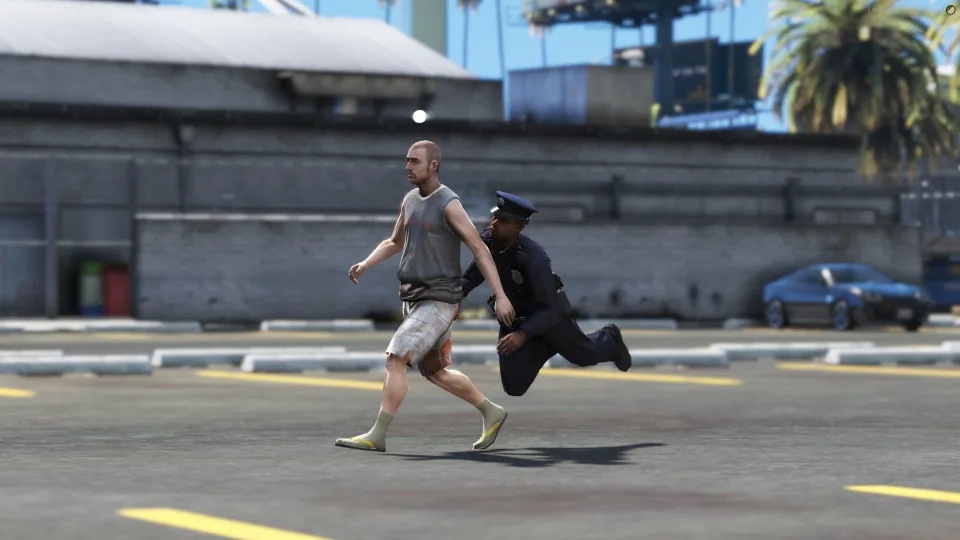
Free FiveM tackle script with 0.00ms idle and 0.03ms active cost. Hold G to sprint, release to lunge — contact required to ragdoll a player. Standalone, unencrypted, ESX/QBCore/Qbox/Gamzky compatible.
Shelved in ESX Scripts110 products on this shelf QBCore Scripts119 products on this shelf Qbox Scripts120 products on this shelf Tebex FREE Scripts23 products on this shelf
FREE
Secure checkout by Tebex
Digital delivery after checkout
Tebex
Your Game Studio, Extended.
Overview
Reviews
Two numbers matter more than most feature lists: 0.00ms at idle, 0.03ms while active. For a physics-based ragdoll tackle script, those figures are unusually lean. Police RP servers can add a physical takedown mechanic without stacking resource cost on top of whatever MDT, handcuff, and dispatch scripts are already running.
How the Mechanic Works
Hold G to build a sprint boost. Release the key — or reach the maximum sprint speed — and your character lunges forward into a leaping tackle. The target only goes down if your character physically contacts them during the ragdoll window. There is no proximity auto-trigger, no radius check, no shortcut. You have to close the gap and make contact.
That contact requirement is the design decision that keeps this usable in serious roleplay. Scripts that knock players down on proximity alone get abused the moment admins aren't watching. This one forces the officer to actually chase their suspect, which is how a tackle works in practice.
Features
- Hold G → sprint boost; release or hit max speed → leap-tackle
- Ragdoll on contact only — no proximity trigger, no abuse shortcut
- Configurable sprint boost strength and tackle duration
- Configurable keybindings
- Cooldown between consecutive tackles to prevent spam
- Performance: 0.00ms idle / 0.03ms active
- Fully unencrypted source — read, modify, integrate freely
- No dependencies required — standalone install
- Free — no purchase, no license key
Who This Is Built For
Police RP and serious roleplay servers that want a physical arrest option without buying into a larger police script bundle. The standalone architecture means you drop it alongside whatever framework you already run — ESX, QBCore, Qbox, or Gamzky Scripts — and it works without wiring up additional resources.
At zero cost, there is no reason not to test it on your server before committing. The unencrypted source means your developers can read exactly what it does, adjust keybinds and timing values to match your server's feel, and integrate it with your existing handcuff or arrest scripts without guessing at hidden logic.
Installation
- Extract the resource and place the folder in
resources. - Add an
ensureentry toserver.cfg. - Restart the server.
- Adjust the keybind and the timing values in the config so the sprint build-up matches how your server feels.
- Tackle a willing second player on a test server before handing it to your police department.
Compatibility
ESX, QBCore and Qbox all work. There is nothing else to install, as the script has no dependencies.
Installation plan
Set up FREE Tackle Script safely
Use the documentation included with the download as the final authority. This plan helps you prepare a rollback, install in the right order, and verify the resource before it reaches players.
- Resource type
- FiveM script
- Catalog category
- ESX Scripts
- Package source
- Shop Tebex
-
Audit the package and requirements
Open the supplied documentation before moving files or changing the database. Build the install order from the package, not from assumptions.
- Identify the actual resource folder, required dependencies, and supported framework version.
- Locate any SQL, configuration examples, permissions, or optional integrations.
- Check whether the documentation requires a specific start order.
Ready when Every dependency and required file has a place in your install plan.
-
Create a rollback point
Prepare the server so the change can be reversed cleanly if the resource conflicts with your current stack.
- Keep an untouched copy of the downloaded package.
- Back up the database and every configuration file you will edit.
- Use a test server or schedule a maintenance window before changing production.
Ready when You can restore the previous database, files, and configuration.
-
Install in the documented order
Apply only the changes supplied for this resource, keeping dependency and startup order intact.
- Place the resource folder where your server loads resources, without renaming it unless instructed.
- Install dependencies first, then import included SQL once and review configuration values.
- Add the documented resource name to the server startup configuration after its dependencies.
Ready when The resource starts without missing files, exports, tables, or dependencies.
-
Verify the complete player flow
Restart the test server, watch both server and client consoles, and exercise the resource before opening it to players.
- Test the main workflow with an authorized player and a player without permission.
- Reconnect and restart once to confirm saved state and startup behavior.
- Review console output again before promoting the same configuration to production.
Complete when The intended flow works twice with no new console errors.
Support reference
Use the exact listing name when you contact support.
FREE Tackle Script
Contact support
FREE Tackle Script compatibility and specs
Category
Delivery
After checkout — order download link
Product terms
See product details — terms vary by resource
No reviews yet — be the first to write one.
Write a review
Reviews are moderated before appearing. Purchased the product? Your review gets a VERIFIED badge automatically.
[ You might also like ]
Related scripts
- ESX
- QBCore
- Qbox
FREE MDT for Police
A fully free police MDT for FiveM with warrants, criminal records, vehicle database, auto nearest-player lookup, and five-language support. ESX, QBCore & Qbox. Rated 4.89/5.
FREE
 New
New

- ESX
- QBCore
- Qbox
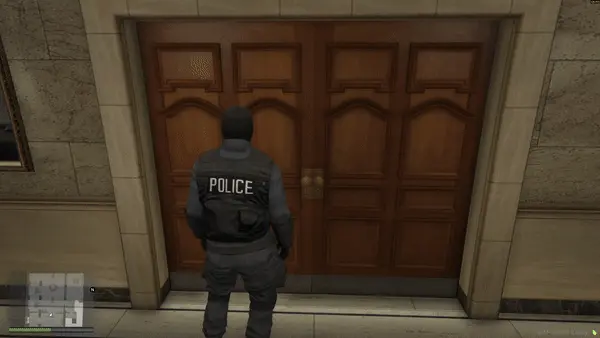
FREE Snake Cam / Under Door Camera
Free FiveM snake cam gives officers a live under-door feed before breaching. Auto door detection, configurable angles, item-gateable, 0.02ms active. ESX, QBCore & Qbox.
FREE
 Sale
Sale
 Sale
Sale
 Sale
Sale
About this FiveM script
FREE Tackle Script is a FiveM resource for esx, qbcore, qbox servers. Review the product details, requirements, and compatibility notes before ordering.
Use the included files and documentation as the source of truth for installation, configuration, dependencies, and any stated performance information.