
Admin Jail
$10.00


Secure checkout by Tebex
Digital delivery after checkout
Tebex
Your Game Studio, Extended.
Overview
Reviews
Commands to use Admin Jail :
- ./adminjailrelease (playerID) - release a player from admin-jail.
- ./adminjailtime - see the current time you have left.
- /adminjail (playerID, reason, time) - jail a player for x time.
There are various many configurable options to use the resource to your liking:
- Ace Permissions. (VIEW DOCUMENTATION).
- Optionable routing buckets configuration on load-in / adminjail.
- Discord webhook logging (track who jails/releases & updates time).
- Menu to view users who are admin-jailed/cked.
- Configurable controls to disable when player is admin-jailed/cked.
- Configurable admin-jail list command - shows all the players currently admin-jailed/cked.
- Configurable admin-jail release location.
- Configurable admin-jail location.
- Configurable text/command names (language).
- Configurable groups to have access to the commands.
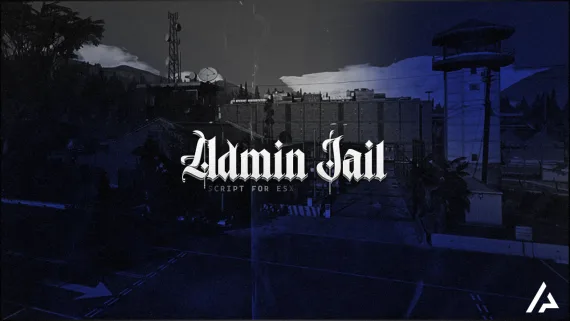
Admin Jail
Admin Jail is a script where x staff groups are able to forcefully jail a player and locking them into a closed area, to where they can’t move depending on how much time you’ve jailed that individual for. The time jailed is saved in the database & will not go down unless the designated player is connected into the server & on that character. This script is useful for semi/serious RP servers, to send those who’s character died into Admin Jail, to where they are no longer able to use that character anymore and or servers who just want to put an individual on “timeout”.
Dependencies:
- qbox & ox_lib
OR
- qb-core & ox_lib
OR
- es_extended & ox_lib
Installation plan
Set up Admin Jail safely
Use the documentation included with the download as the final authority. This plan helps you prepare a rollback, install in the right order, and verify the resource before it reaches players.
- Resource type
- FiveM script
- Catalog category
- FiveM resources
- Package source
- Electus Scripts
-
Audit the package and requirements
Open the supplied documentation before moving files or changing the database. Build the install order from the package, not from assumptions.
- Identify the actual resource folder, required dependencies, and supported framework version.
- Locate any SQL, configuration examples, permissions, or optional integrations.
- Check whether the documentation requires a specific start order.
Ready when Every dependency and required file has a place in your install plan.
-
Create a rollback point
Prepare the server so the change can be reversed cleanly if the resource conflicts with your current stack.
- Keep an untouched copy of the downloaded package.
- Back up the database and every configuration file you will edit.
- Use a test server or schedule a maintenance window before changing production.
Ready when You can restore the previous database, files, and configuration.
-
Install in the documented order
Apply only the changes supplied for this resource, keeping dependency and startup order intact.
- Place the resource folder where your server loads resources, without renaming it unless instructed.
- Install dependencies first, then import included SQL once and review configuration values.
- Add the documented resource name to the server startup configuration after its dependencies.
Ready when The resource starts without missing files, exports, tables, or dependencies.
-
Verify the complete player flow
Restart the test server, watch both server and client consoles, and exercise the resource before opening it to players.
- Test the main workflow with an authorized player and a player without permission.
- Reconnect and restart once to confirm saved state and startup behavior.
- Review console output again before promoting the same configuration to production.
Complete when The intended flow works twice with no new console errors.
Support reference
Use the exact listing name when you contact support.
Admin Jail
Contact support
Admin Jail compatibility and specs
Category
—
Creator
Delivery
After checkout — order download link
Product terms
See product details — terms vary by resource
No reviews yet — be the first to write one.
Write a review
Reviews are moderated before appearing. Purchased the product? Your review gets a VERIFIED badge automatically.
[ You might also like ]
Related scripts
 Popular

 New
New

FiveM resource
- ESX
- QBCore
- Qbox
Brake Overheating
Realistic brake heat mechanics for FiveM — temperature-based brake fade, synchronized caliper glow, and brake upgrade integration. Standalone compatible, 0.00ms idle, works on all vehicles including mods.
$9.00
 Sale
Sale
FiveM resource
- QBCore
- Qbox
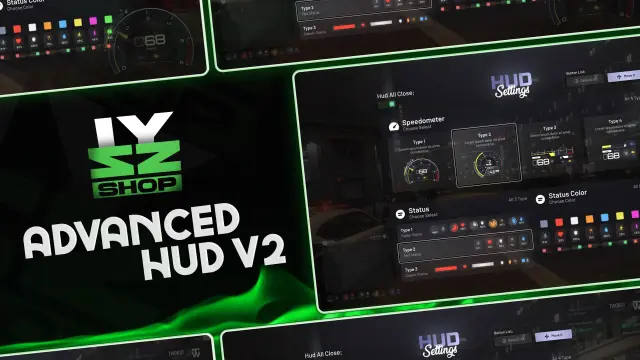
FiveM Lore Friendly Cars Pack 300+ Vehicles
310+ FiveM vehicles organised by GTA fictional manufacturers — Vapid, Declasse, Grotti, Karin and more. Includes police packages, emergency variants, and utility vehicles. Compatible with QBCore, Qbox, ESX, and any framework.
$189.00
$750.00
 Sale
Sale

FiveM resource
- ESX
- QBCore
- Qbox
FREE FiveM Dodgeball Game
Free standalone FiveM dodgeball script with 1v1 to 5v5 match formats and a Vespucci Beach court included. No framework dependency — compatible with ESX, QBCore, Qbox, and Gamzky Scripts.
FREE
 Sale
Sale
About this FiveM script
Admin Jail is a FiveM resource for esx, qbcore, qbox servers. Review the product details, requirements, and compatibility notes before ordering.
Use the included files and documentation as the source of truth for installation, configuration, dependencies, and any stated performance information.