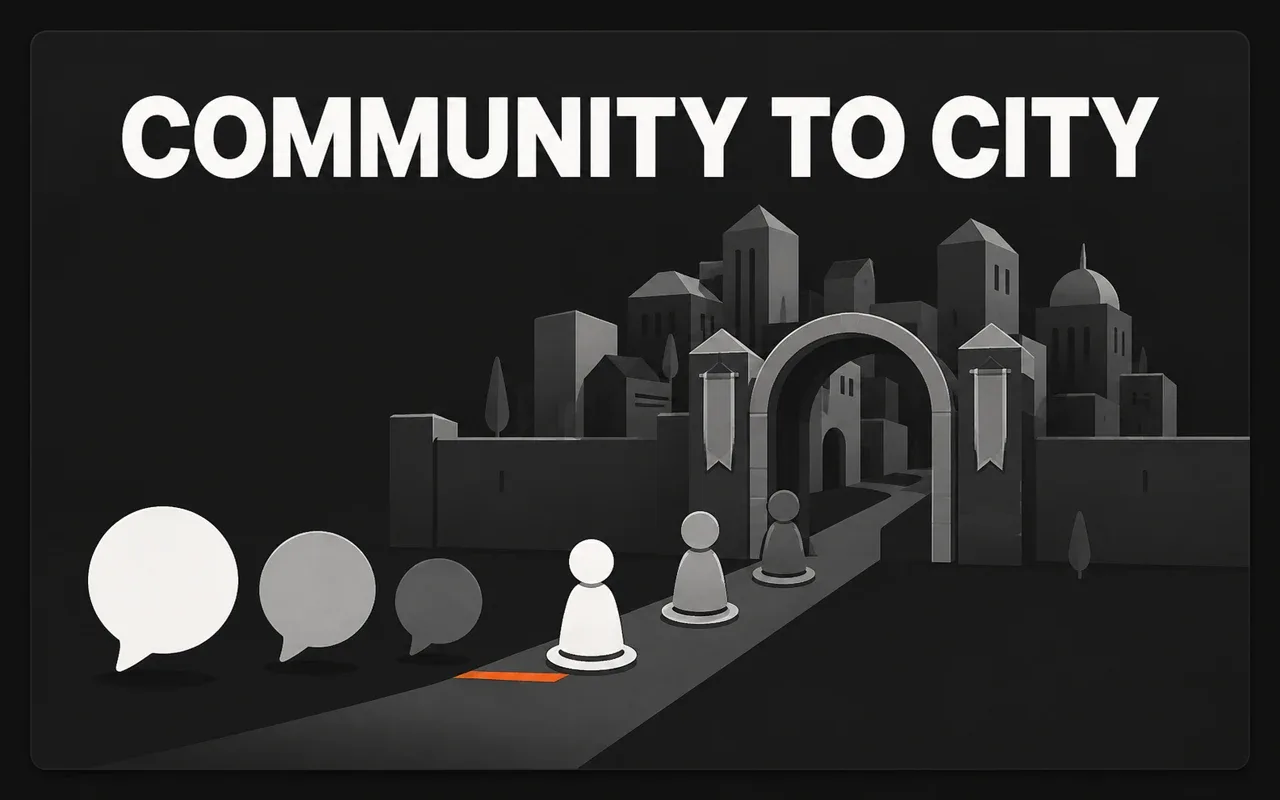
A 4,000-member Discord with 30 players in city is not a community — it is a mailing list. Most FiveM owners obsess over member count while the number that actually pays the server bill is conversion: what percentage of your FiveM Discord community logs into the city this week. The good news is that the gap between members and players is almost always a funnel problem, and funnels can be fixed. Here is the structure that reliably turns lurkers into daily players, with the specific channels, flows and metrics that matter.
The first ten minutes decide everything
A new joiner should hit exactly one decision point, not fifteen channels of noise. The pattern that converts: a single #start-here channel with three buttons — Apply to Play, Watch the City, Read the Rules — and nothing else visible until they pick. Servers that dump new members straight into general chat convert 5–10% of joiners to players; servers with a guided onboarding flow convert 25–40%. Lock everything behind a rules-acknowledgement reaction, but keep the clips channel and announcements publicly visible: those are your shop window, and hiding them from prospects is marketing malpractice.
Fix the allowlist funnel before you advertise
Every allowlist application your staff takes more than 24 hours to review costs you a player who already applied somewhere else. Audit your flow honestly:
- Question count: 6–10 questions is the sweet spot. Past 15, completion rates fall off a cliff — you are filtering for patience, not RP quality.
- Response SLA: publish a target (“reviewed within 12 hours”) and staff it. A ticket bot with a visible queue beats a forms channel nobody owns.
- The bridge to first login: approval should trigger a DM with connect info, a starter guide, and an invitation to a scheduled “new citizen day.” Approved-but-never-logged-in is the most common leak in the whole funnel, and most owners never measure it.
Your clips channel is your best advertisement
Nothing sells a city like its own players’ moments. Make #clips frictionless (media-only channel, no permission gates for posting), run a monthly clip contest with a small store-credit prize, and repost the best ones to TikTok and YouTube Shorts with your connect info in the caption. One viral chase clip outperforms a month of server-list bumps. This is also where presentation pays off — consistent branding across your loading screen, Discord banners and clip overlays makes every shared moment an ad, and ready-made identity packs from marketplace-tebex.io get you that polish without hiring a designer.
Tie Discord roles to in-city life
Roles are the cheapest retention mechanic you own, but only if they mean something. Sync them to the city: @Citizen after first login, @Established at 50 hours, faction roles that mirror in-game jobs (@LSPD, @Mechanic, @Business Owner), and a visible @Supporter tier for store customers. Two effects follow. First, members see a progression ladder before they ever connect — the Discord itself becomes a preview of the city’s depth. Second, role-gated channels give factions a private home, which moves planning and drama into your server instead of off-platform group chats. A role-sync bot wired to your framework takes an evening to set up; whitelist and Discord integration resources on Tebex cover the common stacks.
Events are the heartbeat of a FiveM Discord community
Daily players come from rhythm, not from announcements. The cadence that works: one flagship weekly event (car meet, heist night, court session), one mid-week low-effort event (trivia in city, hide-and-seek with a cash prize), and a published weekly schedule pinned in #events every Monday. Use Discord’s native event feature so members get reminders — RSVP lists also tell you exactly who your warm audience is. In-city content that is genuinely event-shaped helps here: limited-run scenarios and event scripts from store-tebex.io give your calendar substance beyond “come hang out.” UK and EU communities should anchor events to their actual peak (7–10 p.m. local), not to an American schedule — region-focused stores like vortexscripts.co.uk exist because timezone-native communities behave differently, and your calendar should too.
The five numbers to watch weekly
- Join-to-application rate: what % of new Discord members apply within 7 days. Under 20% means your onboarding is leaking.
- Application-to-first-login rate: the silent killer. Should be above 80%.
- Weekly active players ÷ Discord members: healthy whitelisted servers run 15–30%. Below 10%, stop advertising and fix the funnel.
- Day-7 retention: of players who logged in for the first time last week, how many came back.
- Event RSVP-to-attendance: tells you whether your events are promises kept or hype that fizzles.
None of this requires a big team — it requires deciding that your Discord is the top of a funnel rather than a trophy cabinet. Audit the new-joiner path this week, put an SLA on applications, give the clips channel a job, and start a weekly rhythm players can set their watch by. Member count will follow players, not the other way around — and a 800-member Discord that fills 64 slots every night beats a 10,000-member ghost town in every way that counts.